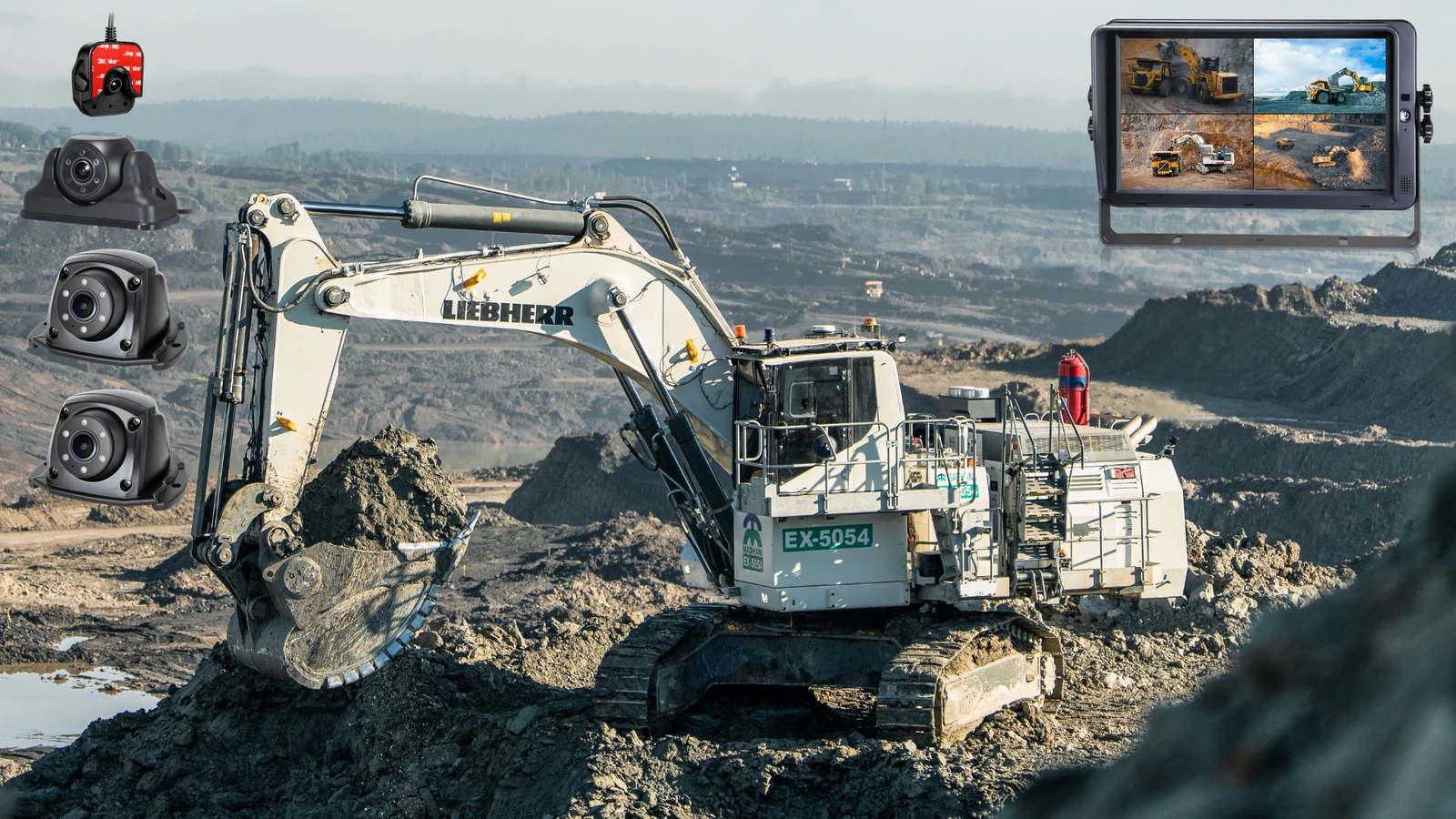
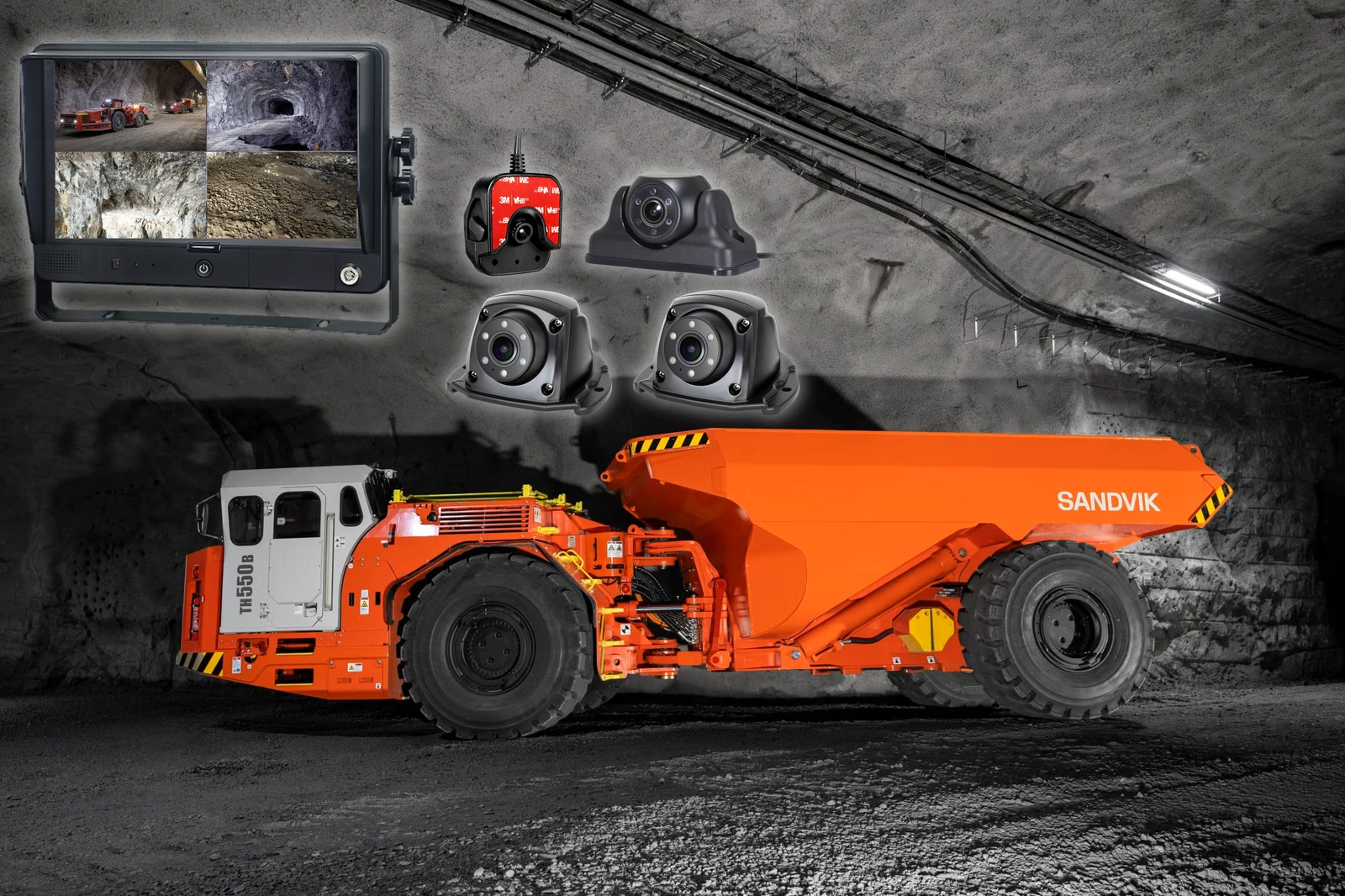
The VisionSure VST-S8501 77GHz Radar Detection System provides radar blind spot detection for heavy equipment. The area behind a big machine is too large to check with mirrors. A camera only helps when the operator is looking at the screen, and dust, fog or darkness can hide what’s there. The VST-S8501 pairs a 77GHz radar with a 1080P camera and a 7” HD monitor. It detects people and obstacles up to 40m behind the vehicle and sounds an alarm in the cab.
Detection that doesn’t depend on light
The FMCW radar works at 76–77GHz and detects obstacles from 0.2 to 40m with ±15cm accuracy. Its beam covers 120° horizontally and 14° vertically. Radar isn’t affected by darkness, rain, fog or dust. Detection keeps working on a night shift or in a dusty pit when the camera picture is poor.
Warnings that get louder as you get closer
Detection length can be set up to 40m and width up to 20m, split into up to five alarm zones. Zones are colour-coded green for far, yellow for middle and red for closest, and they appear as coloured bands over the live camera picture. The alarm becomes more urgent as an obstacle moves into a closer zone.
See what set off the alarm
A 1080P 130° camera with a built-in heater feeds the 7” HD monitor, which shows live video with the radar results on top. The operator hears the in-cab alarm, glances at the screen and sees what triggered it. That shows whether it’s a person, a vehicle or a pile of material before the machine moves again.
Built for pits, yards and washdowns
The radar sensor is sealed to IP69K against high-pressure washdowns, rated from -40°C to +85°C and tested to ISO 16750-3 (5.9G) vibration. The control box and the monitor are both sealed to IP66. The sensor can go on the back of a haul truck or loader, where it takes mud, spray and constant vibration.
Set up for each machine
Detection distance, width and alarm zones are adjusted for each machine using a USB-to-UART cable, or optional 2.4GHz Wi-Fi from a computer or phone. A trigger input turns detection on when the vehicle shifts into reverse. An alarm output of up to 1.0A can drive a beacon or an external alarm, and the system runs on 10–32V DC.